

Piano tuning and maintenance recommendations

Cameron tuning a Steinway piano at Piano Centre in Edmonton.
A New Year, a piano well-cared for.
Quick Maintenance Summary:
Tuning: We recommend getting your piano tuned 2x times per year
Humidity: Aim for minimum 30% humidity in the winter months.
Technician visits: Ideally twice per year
Regulation: As needed—often within the first few years
Voicing: Typically every 5–7 years (sometimes sooner for used pianos)
If you’ve recently purchased a piano—or have owned one for years—it’s natural to wonder: How much maintenance does my piano really need, and why does it matter?
At Piano Centre, we believe understanding why maintenance is recommended makes caring for your piano simpler and more rewarding—especially here in Edmonton, Northern Alberta, where climate plays a major role.
Why Pianos Need Regular Care
A piano is both a precision instrument and a living structure. Roughly 80% of a piano is made of wood, which means it naturally reacts to changes in temperature and humidity.
Inside your piano are over 200 strings, each carrying about 160–180 pounds of tension. Together, that adds up to nearly 20 tons of total tension—so even small environmental changes can have an impact over time.
Tuning: Why Two Per Year Matters
We recommend two tunings per year and here’s why:
• Seasonal climate changes – Long winters and constant furnace use create dry indoor air that affects tuning stability. • Keeping strings in unison – Most notes use 2–3 strings. As they drift apart, tone quality suffers even if the piano doesn’t sound obviously out of tune.
Seasonal tuning changes are normal and expected, not a cause for concern.
Humidity & Our Climate in Northern Alberta
Dry air is one of the biggest challenges for pianos in our region—especially during long winters when furnaces run continuously. Heating systems remove moisture from the air, and over time this dry indoor environment pulls moisture out of the piano’s wood components.
Because a piano is largely made of wood, changes in humidity directly affect its structure. When humidity drops too low:
• Wood parts slowly shrink and contract • The soundboard—the heart of the piano’s tone production—loses crown (its natural curve) • Tuning stability is reduced as string tension shifts with structural movement • Action parts can move out of alignment more quickly
For these reasons, we recommend maintaining at least 30% relative humidity, with 35–45% being ideal when possible.
• Newer homes often manage humidity better thanks to tighter building envelopes and modern furnace humidification systems. • Older homes may experience greater swings in humidity and benefit from closer monitoring during winter months.
A reliable hygrometer near your piano is one of the most useful tools you can own. Although the readings can vary, we recommend trying brands like The ThermoWorks RH Spot Hygrometer and Honeywell HHM10 Humidity Monitor. Hygrometer readings can help you understand what your piano is experiencing day to day—before issues arise.

Photo of a furnace
Why Regular Technician Visits Are So Valuable
When a technician visits your piano twice a year, they do more than adjust pitch. A Piano Technican can also:
• Assess how your piano is reacting to your environment
• Check for early signs of wear or alignment issues
• Offer guidance tailored to your instrument
Our technician has recently completed Steinway factory training and follows the latest manufacturer guidelines—bringing that expertise to every service visit.
Regulation: Often Overlooked, Always Important
Regulation ensures the piano action responds evenly and comfortably.
Every new piano is regulated at the factory, and we verify this before it leaves our store. However:
• Piano actions naturally settle and shift over time • Used pianos often need closer attention • Changes happen gradually, so players often adapt without realizing performance is affected
Regulation addresses: • Key weighting and balance • Damper timing • Hammer distance and velocity
A well-regulated piano supports better technique, faster learning, and greater enjoyment.
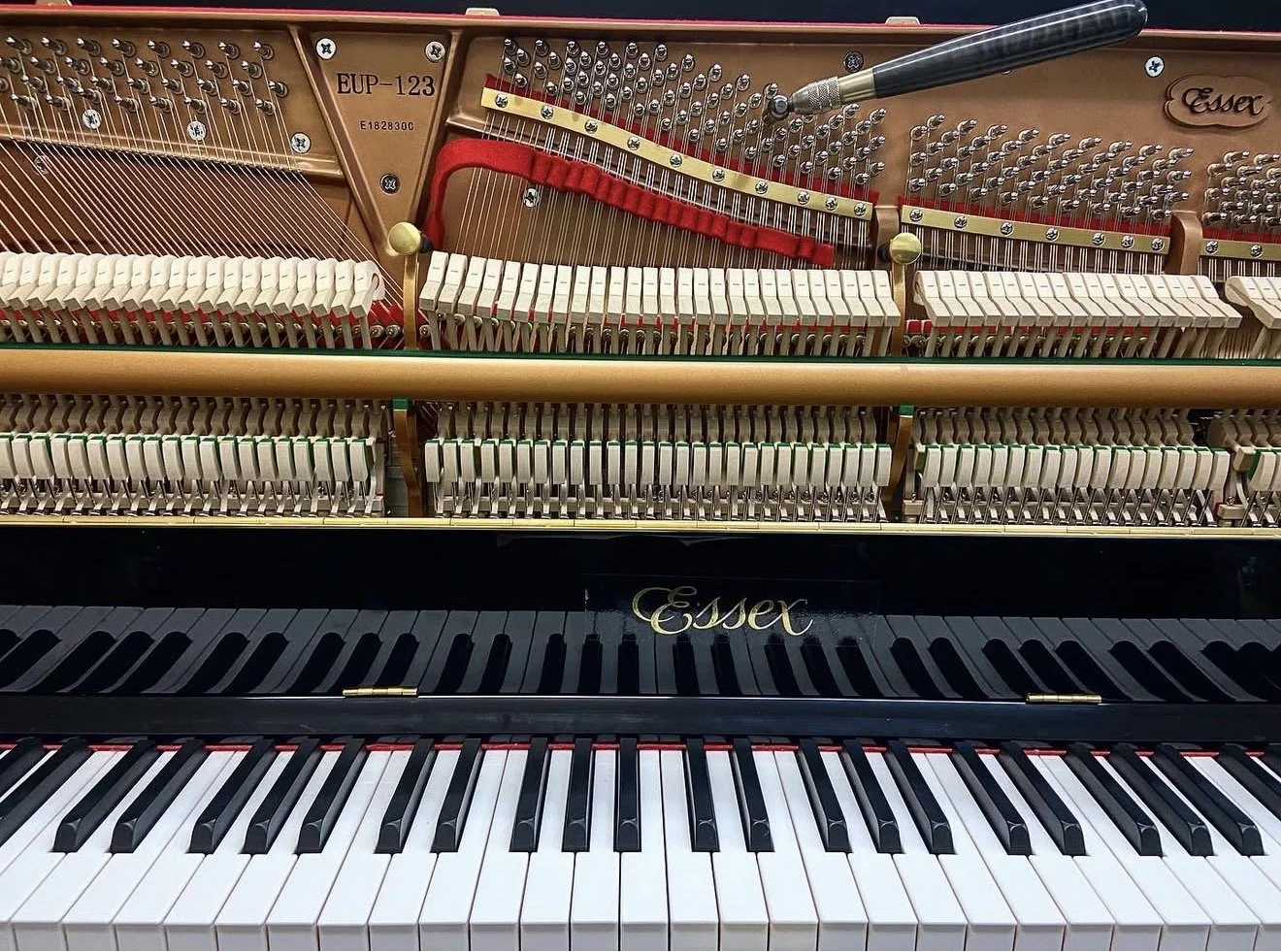
An Essex Piano being tuned - photo courtesy of O’Neill Piano
Voicing: Maintaining a Balanced Tone
As hammers strike strings over years of playing, their surfaces naturally harden. This can make the piano sound brighter or more percussive.
Voicing—typically needed every 5–7 years on a new piano—restores tonal balance. Used pianos may require voicing sooner, depending on wear. Voicing is usually a subtle, musical refinement rather than a dramatic change.
The Bigger Picture
Our goal with piano maintenance is always the people who play the instrument—whether for education, recreation, or professional study.
A well-maintained piano supports: • Better learning and technical development • Greater enjoyment and inspiration • Consistent touch and tone for all players in the household
At the same time, regular care also protects your investment. Many used pianos are under-maintained—not intentionally, but because changes happen slowly and players adapt over time. Unfortunately, this can negatively affect tone, touch, performance, and long-term value.
Proper maintenance preserves both the musical experience today and the health of the instrument for the future. If you’re interested in these services, visit our tuning and maintenance page.
